
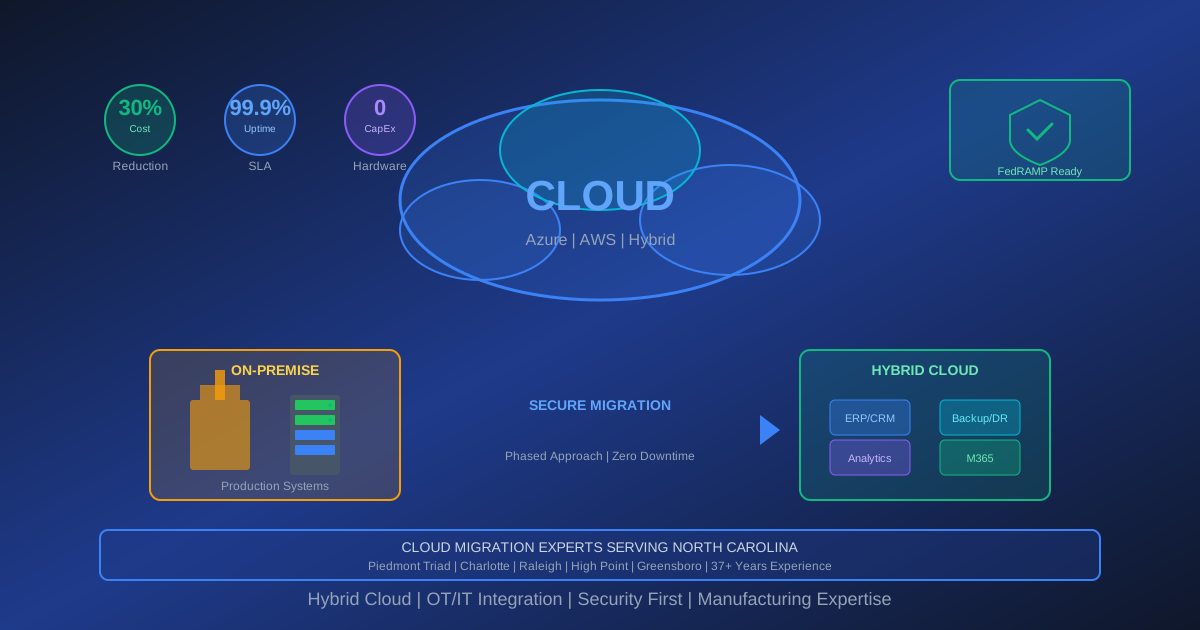
North Carolina manufacturers face unique challenges when migrating to the cloud. Unlike office-based businesses, manufacturing operations must integrate cloud systems with plant floor equipment, maintain low-latency connections for real-time monitoring, and ensure legacy system compatibility. A poorly planned migration can disrupt production and cost more than staying on-premises.
Key takeaway: According to Gartner research, more than 85% of organizations will embrace cloud-first principles by 2025. However, Forrester research shows manufacturing was slower than other industries to adopt cloud computing due to OT/IT integration complexity, cybersecurity concerns, and limited factory connectivity.
Planning a cloud migration? Preferred Data helps North Carolina manufacturers navigate cloud transitions without disrupting operations. Call (336) 886-3282 or schedule your assessment.
Why Manufacturing Cloud Migration Is Different
Office cloud migrations involve moving email, documents, and business applications. Manufacturing cloud migrations must also consider:
- OT/IT convergence - Production systems generate massive data volumes requiring edge processing and selective cloud synchronization
- Latency requirements - Real-time equipment monitoring cannot tolerate cloud round-trip delays
- Legacy systems - Older ERP, MES, and SCADA systems may lack native cloud connectivity
- Compliance - Defense contractors in Charlotte and Fayetteville need FedRAMP-authorized cloud services
Hybrid Cloud: The Manufacturing Sweet Spot
Most Piedmont Triad and Raleigh manufacturers benefit from hybrid cloud architectures that keep time-sensitive operations on-premises while leveraging cloud for analytics, backup, and collaboration.
Keep on-premises:
- Real-time production control systems
- Equipment monitoring with sub-second response requirements
- Highly sensitive intellectual property
Move to cloud:
- Business applications (ERP, CRM, HR)
- Data analytics and AI/ML workloads
- Backup and disaster recovery
- Collaboration tools (Microsoft 365)
Cloud Migration Cost Considerations
Cloud migrations require careful cost modeling. Common mistakes include underestimating:
- Data egress fees - Moving data out of cloud incurs charges
- Bandwidth requirements - Manufacturing generates large data volumes
- Integration development - Connecting legacy systems requires custom work
- Training and change management - Staff need new skills
According to the Flexera 2025 State of the Cloud Report, organizations waste 27% of their cloud spend due to poor planning and optimization - and 84% of organizations say managing cloud spend is their top cloud challenge.
Preferred Data provides detailed TCO analysis comparing your current infrastructure costs against cloud alternatives, ensuring no surprises.
Security and Compliance in the Cloud
Cloud security requires different approaches than on-premises security. North Carolina manufacturers must address:
- Identity and access management - Who can access what, from where
- Data encryption - At rest and in transit
- Network security - Virtual private clouds, firewalls, segmentation
- Compliance requirements - CMMC for defense, NIST frameworks
For manufacturers near Fort Liberty or Cherry Point handling Controlled Unclassified Information, Azure Government and AWS GovCloud provide FedRAMP-authorized environments.
Explore Preferred Data's cloud migration services
A Phased Migration Approach
Successful manufacturing cloud migrations follow phases:
Phase 1: Assessment (4-6 weeks)
- Inventory all applications and dependencies
- Identify integration requirements
- Model costs and define success metrics
Phase 2: Foundation (6-8 weeks)
- Establish cloud infrastructure and security
- Implement hybrid connectivity
- Configure identity management
Phase 3: Migration Waves (8-16 weeks)
- Migrate applications in priority order
- Test thoroughly before cutover
- Train users and document procedures
Phase 4: Optimization (ongoing)
- Monitor costs and performance
- Right-size resources
- Implement automation
Frequently Asked Questions
How long does a manufacturing cloud migration take?
Typical migrations take 6-12 months depending on complexity. Simple migrations of business applications can complete in 3-4 months. Complex environments with extensive OT/IT integration may require 12-18 months.
Will cloud migration disrupt production?
Not with proper planning. Preferred Data uses phased approaches with weekend cutovers and rollback plans. Production-critical systems are migrated during scheduled maintenance windows with thorough testing.
Is cloud cheaper than on-premises?
It depends on your situation. Cloud eliminates capital expenses but incurs ongoing operational costs. Manufacturing data volumes and compliance requirements significantly impact cloud costs. Our assessments provide accurate TCO comparisons.
Start Your Cloud Journey
Cloud migration is inevitable for North Carolina manufacturers seeking competitive advantages. The question is not whether to migrate, but how to migrate successfully.
Preferred Data has guided manufacturers across the Piedmont Triad, Charlotte, and Raleigh through cloud transitions since cloud computing emerged. We understand manufacturing operations and can bridge the gap between IT strategy and plant floor reality.
Get your free cloud readiness assessment:
- Phone: (336) 886-3282
- Email: Contact us
- Address: 1208 Eastchester Drive, Suite 131, High Point, NC 27265
On-site support throughout North Carolina and within 200 miles of High Point.
Sources: