
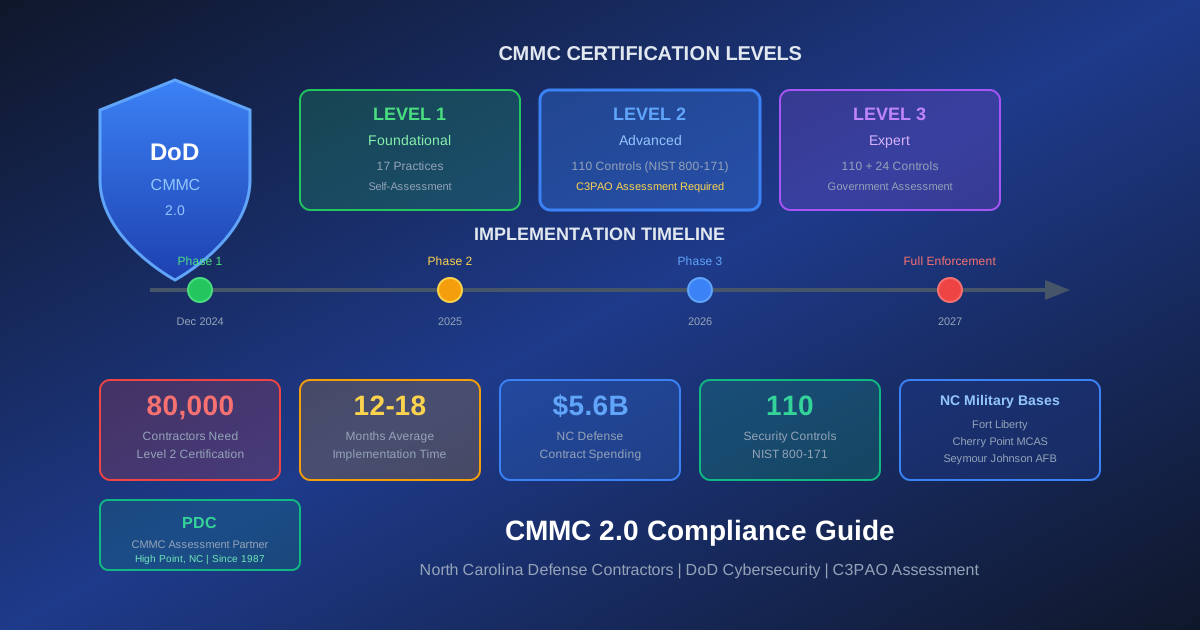
For North Carolina defense contractors and manufacturers, CMMC 2.0 compliance is no longer a future concern - it is an immediate business requirement. The Department of Defense finalized its Cybersecurity Maturity Model Certification program in late 2025, and the phased rollout is now underway. Contractors who fail to achieve certification risk losing their ability to compete for DoD contracts entirely.
Key takeaway: According to the CyberAB Town Hall (October 2024), only 431 organizations have achieved final CMMC Level 2 certification - representing just 0.5% of the roughly 80,000 companies the DoD estimates will require Level 2. With 12-18 month implementation timelines and assessor wait times stretching 3-6 months, contractors not actively pursuing certification today are effectively choosing to exit the defense industrial base by 2026.
North Carolina ranks 21st nationally in defense contract spending, with DoD investing $5.6 billion in the state in fiscal year 2022 according to the Department of Defense Office of Local Defense Community Cooperation. If your company near Fort Liberty, Cherry Point, Seymour Johnson Air Force Base, or anywhere in North Carolina handles Federal Contract Information or Controlled Unclassified Information, CMMC compliance determines your eligibility for future defense work.
Ready to start your CMMC compliance journey? Preferred Data provides comprehensive CMMC assessment and implementation services for North Carolina defense contractors. Call (336) 886-3282 or schedule your free consultation today.
What Is CMMC 2.0 and Why Does It Matter?
The Cybersecurity Maturity Model Certification (CMMC) program establishes a unified cybersecurity standard for all defense contractors, subcontractors, and supply chain entities that handle sensitive federal information. The Department of Defense created CMMC to address persistent cybersecurity vulnerabilities in the Defense Industrial Base that foreign adversaries have exploited to steal intellectual property and sensitive defense information.
The Shift from Self-Attestation to Verification
Before CMMC, defense contractors self-attested their compliance with NIST SP 800-171 requirements. This self-attestation approach proved insufficient - many contractors claimed compliance without implementing required controls. CMMC changes this by requiring third-party verification for contractors handling Controlled Unclassified Information (CUI).
The stakes are significant: compliance is now a "go/no go" requirement for DoD contract eligibility. Non-compliance can also trigger False Claims Act liability, with penalties reaching three times the government's damages plus per-claim penalties according to legal analysis from Wiley Law.
The Three CMMC Levels
CMMC 2.0 establishes three certification levels based on the sensitivity of information handled:
Level 1 (Foundational): For contractors handling only Federal Contract Information (FCI). Requires 17 security practices focused on basic cyber hygiene. Self-assessment is permitted annually.
Level 2 (Advanced): For contractors handling Controlled Unclassified Information (CUI). Requires implementation of all 110 security controls from NIST SP 800-171 Rev 2. Most contractors at this level require third-party certification by a CMMC Third-Party Assessment Organization (C3PAO) every three years, with annual affirmations.
Level 3 (Expert): For contractors handling the most sensitive CUI requiring enhanced protection. Includes all Level 2 requirements plus 24 additional controls from NIST SP 800-172. Requires government-led assessments by the Defense Industrial Base Cybersecurity Assessment Center (DIBCAC).
Preferred Data Insight: Most North Carolina defense contractors will need Level 2 certification, which represents the bulk of the compliance effort and cost. According to DoD estimates in the 32 CFR rule, Level 2 requirements will apply to approximately 65% of the Defense Industrial Base.
The CMMC 2.0 Implementation Timeline
The Department of Defense published its final CMMC rule on September 10, 2025, with the DFARS requirements becoming effective November 10, 2025. Implementation follows a four-phase approach according to industry analysis:
Phase 1: November 2025 to November 2026
Contracting officers will include Level 1 (Self) or Level 2 (Self) requirements in applicable solicitations and contracts. The DoD also has discretion to require Level 2 C3PAO certification during this phase for contracts involving sensitive CUI.
What this means for NC contractors: New solicitations will begin including CMMC requirements immediately. If you are bidding on DoD contracts in 2026, you need certification processes underway now.
Phase 2: November 2026 to November 2027
Level 2 C3PAO certification requirements become mandatory for all applicable solicitations and contracts. The DoD can also include Level 3 DIBCAC requirements for particularly sensitive programs.
Critical deadline: Contractors not certified by November 2026 will be ineligible to bid on most DoD contracts requiring CUI handling.
Phase 3: November 2027 to November 2028
Level 3 DIBCAC requirements apply to all applicable solicitations and contracts. CMMC requirements extend to option periods of existing contracts.
Phase 4: November 2028 Onward
Full implementation across all DoD contracts above the micro-purchase threshold where contractors handle FCI or CUI, including all option periods.
North Carolina Defense Contractor Landscape
North Carolina hosts one of the nation's most significant concentrations of military installations and defense industry activity, creating substantial opportunities for contractors who achieve CMMC compliance.
Major Military Installations
According to the Economic Development Partnership of NC, key installations include:
Fort Liberty (formerly Fort Bragg): Home to over 48,000 military personnel and nearly 9,500 civilian and contractor employees. Fort Liberty's contracting offices award approximately $1 billion in contracts annually for base support, equipment, supplies, and services. Major defense contractors on-site include Lockheed Martin, ManTech, L-3 Communications, and Booz Allen Hamilton.
Marine Corps Air Station Cherry Point: Fleet Readiness Center East employs more than 4,000 military, civilian, and contract workers, with facilities built to conduct F-35 overhauls. FRCE is North Carolina's largest maintenance, repair, and overhaul provider with nearly $2 billion in local annual economic impact.
Seymour Johnson Air Force Base: Home to the 4th Fighter Wing and supporting aerospace and defense contractors throughout the Goldsboro region.
Camp Lejeune: One of the largest Marine Corps bases in the country, supporting significant contractor operations in Jacksonville and surrounding areas.
The NC Defense Economy
The military supports more than 650,000 jobs in North Carolina according to NC Commerce. More than 180 aerospace companies are involved in aircraft manufacturing across the state, and Charlotte alone hosts more than 1,000 defense contractors including General Dynamics, Northrop Grumman, UTC Aerospace Systems, and BAE Systems.
Every year approximately 18,000 service members transition from military service in North Carolina, providing the skilled workforce defense contractors need.
The business opportunity: For North Carolina manufacturers and contractors positioned near Fort Liberty, Cherry Point, Camp Lejeune, or Seymour Johnson, CMMC compliance unlocks access to billions in annual defense contracting opportunities. Failure to certify means losing this business to competitors.
Understanding CMMC Level 2 Requirements
For most North Carolina defense contractors, Level 2 certification represents the compliance target. This level requires full implementation of the 110 security controls defined in NIST SP 800-171 Rev 2.
The 14 Control Families
NIST 800-171 organizes its 110 controls into 14 families:
- Access Control: Managing who can access systems and data
- Audit and Accountability: Logging and monitoring system activity
- Awareness and Training: Educating personnel on security responsibilities
- Configuration Management: Establishing secure baseline configurations
- Identification and Authentication: Verifying user identities
- Incident Response: Detecting, responding to, and recovering from incidents
- Maintenance: Performing secure system maintenance
- Media Protection: Protecting storage media containing CUI
- Personnel Security: Screening personnel with access to CUI
- Physical Protection: Securing physical access to systems
- Risk Assessment: Identifying and evaluating risks
- Security Assessment: Evaluating security control effectiveness
- System and Communications Protection: Protecting communications and system boundaries
- System and Information Integrity: Detecting and correcting system flaws
Assessment Objectives
While there are 110 security requirements, formal C3PAO assessments evaluate 320 individual assessment objectives derived from these requirements. Each control contains multiple objectives, all of which must be satisfied to achieve a MET status.
Important note: The DoD continues to require NIST SP 800-171 Rev 2 for current CMMC compliance, though contractors should monitor guidance for Rev 3 implementation expected between late 2026 and early 2027.
Need help understanding which controls apply to your operations? Preferred Data provides gap assessments that identify exactly which of the 110 controls require remediation for your North Carolina facility. Schedule your assessment.
CMMC Implementation Costs for NC Contractors
One of the most common questions North Carolina defense contractors ask is how much CMMC compliance will cost. The answer depends on your organization's current security posture, IT infrastructure, and the scope of CUI access.
Cost Ranges by Level and Maturity
Based on industry research and implementation experience:
Level 1 Compliance: The DoD estimates Level 1 costs at $3,000 to $5,000 for basic implementation of the 17 required practices.
Level 2 Compliance for SMBs:
- Gap analysis and self-assessment: $5,000 to $10,000
- Remediation and IT upgrades: $20,000 to $150,000 depending on current maturity
- Consulting and implementation support: $35,000 to $130,000
- C3PAO assessment fees: $15,000 to $50,000 depending on scope
For organizations largely compliant with NIST 800-171: Expect $35,000 to $100,000 for consulting and auditing plus the cost of fixing remaining compliance gaps.
For organizations with limited existing security controls: Budget $100,000 or more for comprehensive implementation including technology, consulting, and certification.
Hidden Costs to Consider
Beyond direct compliance costs, North Carolina contractors should budget for:
- Annual affirmation and continuous monitoring: Ongoing costs to maintain compliance
- Employee training: Security awareness and role-specific training
- Technology licensing: Endpoint protection, SIEM, encryption, secure file sharing
- Documentation maintenance: Keeping policies, procedures, and SSP current
- POA&M remediation: If conditional certification is issued, you have 180 days to close out findings
Cost perspective: While CMMC compliance represents significant investment, consider the alternative. The average industrial sector data breach costs $5.56 million according to the IBM 2024 Cost of a Data Breach Report - an 18% increase from 2023. More importantly, non-compliance means losing eligibility for DoD contracts - potentially your entire revenue stream for defense work.
Funding Assistance for SMBs
The Department of Defense and state programs offer funding options for small businesses according to industry resources:
- SBIR/STTR programs: Research and development funding that can support cybersecurity investments
- Small Business Development Centers (SBDC): Local support and guidance
- DoD assistance programs: Targeted support for DIB cybersecurity improvement
Preferred Data can help North Carolina contractors identify applicable funding programs and structure compliance investments effectively.
The C3PAO Assessment Process
For Level 2 contractors handling CUI, third-party assessment by a CMMC Third-Party Assessment Organization (C3PAO) is required. Understanding this process helps you prepare effectively.
Timeline Expectations
According to CMMC assessment guidance, the typical certification journey takes 4 to 12 months:
Months 1-2: Conduct comprehensive gap analysis to identify which of the 110 controls require remediation.
Months 3-6: Implement missing controls. This phase typically takes longest, involving policy development, technology deployment, employee training, and system reconfiguration.
Months 7-9: Organize documentation and evidence. You must maintain a System Security Plan (SSP), network diagrams, data flow diagrams, policies, and procedures that demonstrate control implementation.
Months 10-12: Complete your C3PAO assessment.
What Happens During a C3PAO Assessment
The C3PAO assessment process includes:
Scoping Call: A 90-minute meeting to determine and validate assessment scope. The C3PAO reviews your asset categorization and system component scoping.
Document Review: You upload your SSP, network diagrams, data flow diagrams, policies, procedures, and Customer Responsibility Matrices. Assessors review these for completeness and consistency.
Assessment Planning: Weekly meetings develop the Assessment Plan, documenting assessor identities, on-site locations, and the schedule.
On-Site Assessment: A week-long intensive evaluation examining all 320 assessment objectives. Assessors interview personnel, observe practices, and review evidence.
Results and Certification: If all requirements are MET, you receive certification valid for three years. If some requirements receive NOT MET status with an approved POA&M, you receive Conditional certification with 180 days to remediate.
Current Availability Challenges
C3PAOs are already reporting full calendars into 2026. With limited assessor capacity and high demand, contractors who have not scheduled assessments face significant delays that could impact contract eligibility.
Do not wait. Begin your compliance journey now to secure C3PAO availability before your contract deadlines.
How Preferred Data Supports North Carolina Defense Contractors
Since 1987, Preferred Data has provided technology solutions for North Carolina businesses including defense contractors and manufacturers across the Piedmont Triad, Charlotte, Raleigh, and throughout the state.
Comprehensive CMMC Services
CMMC Gap Assessment
Our team evaluates your current security posture against CMMC Level 2 requirements, identifying exactly which of the 110 NIST 800-171 controls need remediation. You receive a detailed roadmap prioritizing actions by risk and cost.
Learn about our cybersecurity assessment services
Implementation and Remediation
We help you implement missing controls including:
- Policy and procedure development
- Technology deployment and configuration
- Employee security awareness training
- System Security Plan documentation
- Evidence collection and organization
Continuous Compliance Support
CMMC requires ongoing compliance, not just point-in-time certification. Our managed IT services provide:
- 24/7 security monitoring and threat detection
- Continuous vulnerability management
- Patch management and configuration maintenance
- Annual affirmation documentation support
- On-site support within 200 miles of High Point, NC
Assessment Preparation
We prepare you for C3PAO assessment success by conducting pre-assessment reviews, organizing evidence, and ensuring your team is ready for assessor interviews.
What sets PDC apart: Unlike national cybersecurity consultants with distant support centers, Preferred Data is locally based in High Point with 37+ years serving North Carolina businesses. We understand the unique needs of defense contractors operating near Fort Liberty, Cherry Point, and throughout NC. We provide same-day on-site support when needed and long-term partnership rather than project-based engagement.
Preparing for CMMC Compliance: Your Action Plan
North Carolina defense contractors should begin these steps immediately:
1. Determine Your Required Level
Review your contracts and the type of information you handle:
- Only Federal Contract Information (FCI) = Level 1
- Controlled Unclassified Information (CUI) = Level 2
- Highly sensitive CUI programs = Level 3
2. Conduct a Gap Assessment
Evaluate your current security posture against required controls. Identify which of the 110 NIST 800-171 controls you have implemented, partially implemented, or not implemented.
3. Develop a Remediation Plan
Create a prioritized plan addressing:
- Quick wins that can be implemented immediately
- Technology investments required
- Policy and procedure development needs
- Training requirements
- Timeline aligned with contract deadlines
4. Implement and Document
Deploy required controls and maintain comprehensive documentation including your System Security Plan, policies, procedures, and evidence of implementation.
5. Engage a C3PAO
Schedule your assessment early - wait times are increasing. Preferred Data can recommend qualified C3PAOs and help you prepare for assessment success.
6. Maintain Continuous Compliance
CMMC is not a one-time certification. Implement ongoing monitoring, conduct annual affirmations, and address any changes to your environment that affect compliance.
Frequently Asked Questions
How long does it take to achieve CMMC Level 2 certification?
Most defense contractors need 6 to 12 months from initiating their compliance program to completing C3PAO certification. Organizations with mature security programs may achieve certification in 4-6 months, while those starting from minimal controls may need 12-18 months. Current C3PAO availability constraints can add 3-6 months of wait time for assessment scheduling.
Does CMMC apply to subcontractors?
Yes. CMMC requirements flow down to subcontractors that process, store, or transmit Federal Contract Information or Controlled Unclassified Information. Prime contractors are responsible for ensuring their subcontractors meet required CMMC levels. If your company provides components or services to defense primes in Charlotte, Raleigh, or elsewhere in North Carolina, you likely need CMMC certification.
What is the difference between CMMC self-assessment and C3PAO assessment?
Level 1 and some Level 2 contractors may self-assess annually. However, most contractors handling CUI require third-party C3PAO assessment every three years. C3PAO assessments provide independent verification that you have implemented all 110 required controls, not just claimed compliance.
What happens if we fail a C3PAO assessment?
If some requirements receive NOT MET status but you meet thresholds for Conditional certification, you have 180 days to remediate findings and undergo POA&M closeout assessment. If you cannot close out findings within 180 days, your certification expires and you must restart the assessment process. Contract eligibility is at risk during this period.
Can we use cloud services for CMMC compliance?
Yes, but cloud services must be FedRAMP authorized at an appropriate level. Microsoft 365 GCC High and Azure Government are common choices for North Carolina defense contractors. Preferred Data can help you implement compliant cloud solutions that meet CMMC requirements.
How much ongoing maintenance does CMMC require?
CMMC requires annual affirmations confirming continued compliance, continuous monitoring of security controls, regular employee training updates, and documentation maintenance as your environment changes. Many North Carolina contractors partner with managed service providers like Preferred Data to handle ongoing compliance requirements efficiently.
Start Your CMMC Compliance Journey Today
CMMC 2.0 is now in effect, and the window for proactive compliance is closing. North Carolina defense contractors who wait risk losing access to the billions in DoD contracts flowing through Fort Liberty, Cherry Point, Seymour Johnson, and installations across the state.
The path forward is clear: assess your current state, remediate gaps, achieve certification, and maintain ongoing compliance. Preferred Data has helped North Carolina businesses navigate complex technology challenges for 37 years, and we are ready to guide your CMMC journey.
Get Your Free CMMC Readiness Assessment
Preferred Data will evaluate your current security posture against CMMC Level 2 requirements and provide a clear roadmap for achieving certification - at no cost and with no obligation.
Contact Preferred Data today:
- Phone: (336) 886-3282
- Email: [email protected]
- Web: Request your assessment
- Address: 1208 Eastchester Drive, Suite 131, High Point, NC 27265
On-site support available throughout North Carolina: Fort Liberty (Fayetteville), Camp Lejeune (Jacksonville), Cherry Point (Havelock), Seymour Johnson (Goldsboro), Charlotte, Raleigh, Greensboro, Durham, Winston-Salem, and within 200 miles of our High Point headquarters.
Do not let CMMC requirements cost you defense contract opportunities. Partner with Preferred Data - High Point's trusted technology advisor since 1987 - and secure your position in North Carolina's defense industrial base.
Sources:
- CMMC 2.0 Details and Links to Key Resources - DoD Business
- CMMC 2.0 Deadlines and Rules: Your Complete 2025 Compliance Guide - Godlan
- Additional Analysis on DOD's Final Rule for CMMC - Wiley Law
- NIST SP 800-171 Rev 2 - Protecting Controlled Unclassified Information
- Military and Defense in North Carolina - EDPNC
- Aerospace and Defense - NC Commerce
- How Much Does NIST 800-171 and CMMC Compliance Cost? - CyberSheath
- CMMC Assessment Timeline - CMMC Audit
- Understanding the Role of C3PAOs in CMMC 2.0 Certification - Encompass Consultants
- CMMC Phase 1 Is Here: What Defense Contractors Must Do Now - GovConWire
- CMMC Deadline 2025: Phase 1 Enforcement Begins - Secureframe
- Cost of a Data Breach: The Industrial Sector - IBM