
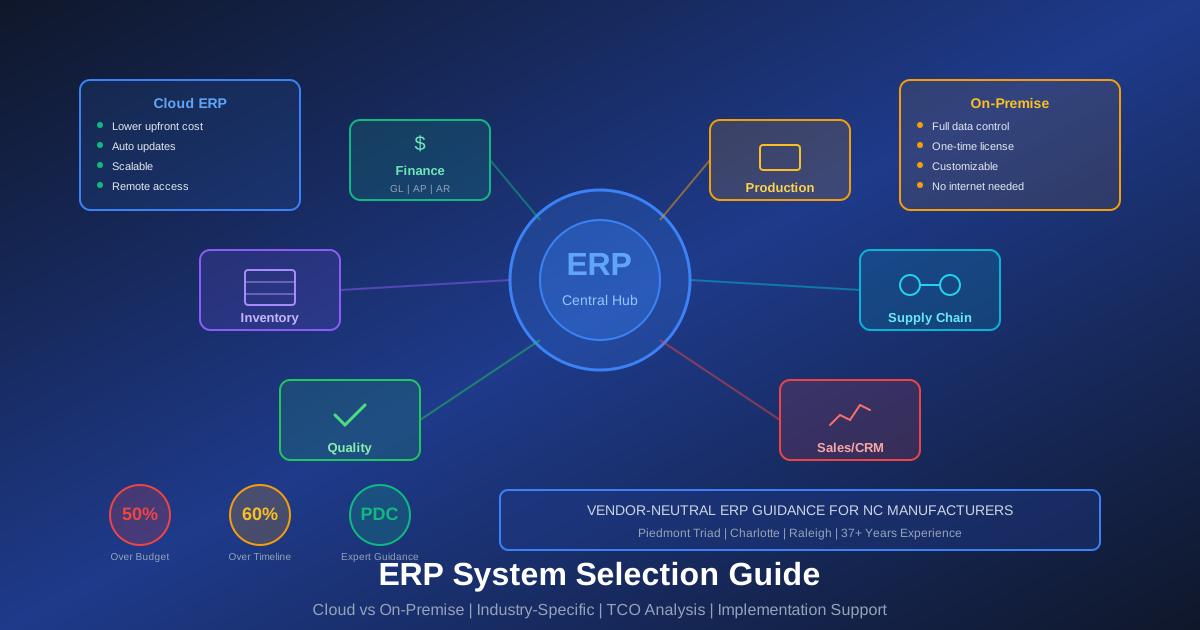
Selecting an ERP system is one of the most consequential technology decisions a North Carolina manufacturer makes. The right system streamlines operations and enables growth. The wrong choice creates years of workarounds, frustration, and eventual replacement costs that dwarf the original investment.
Key takeaway: According to the Panorama Consulting 2024 ERP Report, 51% of ERP implementations exceed their budget, with manufacturing organizations experiencing even higher rates of cost overruns and timeline delays. Proper selection and planning are critical.
Evaluating ERP systems? Preferred Data provides independent ERP selection guidance for North Carolina manufacturers. Call (336) 886-3282 or schedule your consultation.
Understanding Your ERP Requirements
Before evaluating vendors, document your requirements across key areas:
Production Requirements
- Make-to-stock, make-to-order, or configure-to-order?
- Discrete, process, or mixed-mode manufacturing?
- Shop floor data collection needs
- Quality management requirements
Financial Requirements
- Multi-entity and multi-currency needs
- Cost accounting methodology
- Budgeting and forecasting
- Reporting and analytics
Supply Chain Requirements
- Procurement and vendor management
- Inventory management across locations
- Warehouse management complexity
- Demand planning and MRP
Integration Requirements
- CAD/CAM systems
- Plant floor equipment
- E-commerce platforms
- EDI with customers and suppliers
Piedmont Triad and Charlotte manufacturers should prioritize requirements unique to their operations before evaluating generic feature lists.
Cloud vs. On-Premise ERP
This fundamental decision impacts total cost of ownership, IT requirements, and flexibility:
Cloud ERP Advantages
- Lower upfront investment
- Automatic updates and maintenance
- Accessible from anywhere
- Scales with business growth
Cloud ERP Considerations
- Ongoing subscription costs
- Internet dependency
- Data residency and security concerns
- Customization limitations
On-Premise Advantages
- One-time license costs
- Complete data control
- Unlimited customization
- No internet dependency
On-Premise Considerations
- Higher upfront investment
- Internal IT requirements
- Upgrade responsibility
- Infrastructure maintenance
Most mid-market North Carolina manufacturers now choose cloud or hybrid deployments, but on-premise remains appropriate for specific situations.
Learn about Preferred Data's custom software capabilities
Industry-Specific vs. General ERP
Manufacturing ERP systems range from general platforms configured for manufacturing to industry-specific solutions:
Industry-Specific ERP
- Pre-built functionality for your processes
- Industry best practices embedded
- Faster implementation
- Vendor understands your business
General ERP
- Broader functionality across departments
- Larger partner ecosystem
- More configuration options
- May require significant customization
High Point furniture manufacturers, Greensboro textile producers, and Raleigh aerospace suppliers each have unique requirements that may favor industry-specific solutions.
Total Cost of Ownership
ERP costs extend far beyond software licensing:
- Software licensing: Initial and ongoing costs
- Implementation services: Configuration, data migration, training
- Infrastructure: Servers, networking (on-premise only)
- Customization: Development for unique requirements
- Integration: Connecting to other systems
- Ongoing support: Annual maintenance and updates
- Internal resources: Project team time and IT support
A $100,000 software license often becomes a $500,000+ total investment. Accurate TCO modeling prevents budget surprises.
Implementation Success Factors
ERP implementations succeed or fail based on:
- Executive sponsorship - Visible leadership commitment
- Dedicated project team - People with time allocation
- Change management - User adoption and training
- Data quality - Clean data for migration
- Realistic timeline - Adequate time for testing
- Partner quality - Experienced implementation team
Frequently Asked Questions
How long does ERP implementation take?
Mid-market manufacturing ERP implementations typically take 6-12 months from project kick-off to go-live. Complex environments with extensive customization may require 12-18 months. Rushing implementation increases failure risk.
Should we customize our ERP?
Minimize customization where possible - customizations complicate upgrades and increase costs. However, legitimate competitive advantages may justify targeted customization. Preferred Data helps identify where customization provides real value.
What about the PDC Software Suite?
Preferred Data developed the PDC Software Suite specifically for manufacturing environments. It provides an alternative for manufacturers whose requirements do not fit traditional ERP models. Contact us to discuss whether it fits your needs.
Make the Right ERP Decision
Selecting ERP is a multi-year commitment affecting every department. North Carolina manufacturers should invest adequate time in selection, engage experienced advisors, and plan implementation carefully.
Preferred Data has supported manufacturing technology decisions in the Piedmont Triad, Charlotte, and Raleigh for 37 years. We provide vendor-neutral guidance to help you select the right system.
Get independent ERP guidance:
- Phone: (336) 886-3282
- Email: Contact us
- Address: 1208 Eastchester Drive, Suite 131, High Point, NC 27265
On-site support throughout North Carolina and within 200 miles of High Point.
Sources: